
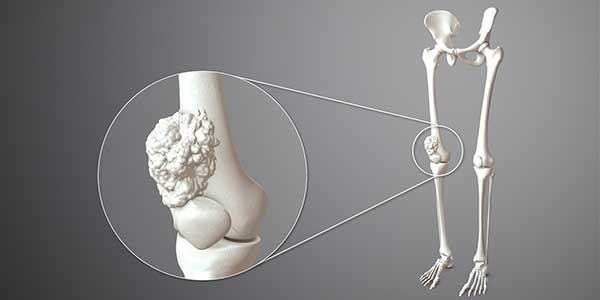
Bone cancer can begin in any bone in the body, but it most commonly affects the pelvis or the long bones in the arms and legs. Primary bone cancers are the most serious of all bone cancers. They form directly in the bones or surrounding tissue, such as cartilage. Types of primary bone cancer:
Osteosarcoma:Osteosarcoma arises from bone-forming cells called osteoblasts in osteoid tissue (immature bone tissue). This tumor typically occurs in the arm near the shoulder and in the leg near the knee in children, adolescents, and young adults (3) but can occur in any bone, especially in older adults
Chondrosarcoma:Chondrosarcoma begins in cartilaginous tissue. Chondrosarcoma most often forms in the pelvis, upper leg, and shoulder and usually grows slowly, although sometimes it can grow quickly and spread to other parts of the body. Chondrosarcoma occurs mainly in older adults (over age 40)
Ewing sarcoma: Ewing sarcoma usually arises in bone but may also rarely arise in soft tissue (muscle, fat, fibrous tissue, blood vessels, or other supporting tissue). Ewing sarcomas typically form in the pelvis, legs, or ribs, but can form in any bone
Cancer can also spread, or metastasize, from another part of your body to your bones. This is known as secondary bone cancer, and this type is more common than primary bone cancer.
Signs and symptoms of bone cancer include:
- Bone pain
- Swelling and tenderness near the affected area
- Weakened bone, leading to fracture
- Fatigue
- Unintended weight loss
Your doctor may use the following methods to determine the stage of cancers in the bones:
- a biopsy, which analyzes a small sample of tissue to diagnose cancer
- a bone scan, which checks the condition of the bones
- a blood test
- imaging testing that includes X-rays, as well as MRI and PET CT scans, to get in-depth views of the bones’ structure
Treatment options depend on the type, size, location, and stage of the cancer, as well as the person’s age and general health. Treatment options for bone cancer include:
Surgery: Surgery is the usual treatment for bone cancer. The surgeon removes the entire tumor with negative margins. The surgeon may also use special surgical techniques to minimize the amount of healthy tissue removed along with the tumor.Dramatic improvements in surgical techniques and preoperative tumor treatment have made it possible for most patients with bone cancer in an arm or leg to avoid radical surgical procedures .However, most patients who undergo limb-sparing surgery need reconstructive surgery to regain limb function.
Chemotherapy: treatment with powerful cancer-killing medication
Radiation therapy: also called radiotherapy, involves the use of high-energy x-rays to kill cancer cells. This treatment may be used in combination with surgery
Cryosurgery: Cryosurgery is the use of liquid nitrogen to freeze and kill cancer cells. This technique can sometimes be used instead of conventional surgery to destroy tumors in bone
Targeted therapy: Targeted therapy is the use of a drug that is designed to interact with a specific molecule involved in the growth and spread of cancer cells.
Every examination and operation related to the disease should be performed by a properly equipped hospital with the latest medical technology and professional academic medical staff. The Turkish Health Group will definitely direct you to the hospitals with the most modern medical equipment and professional medical staff related to your disease. Contact us for more information and a free second medical reference from a professional Turkish doctors.