
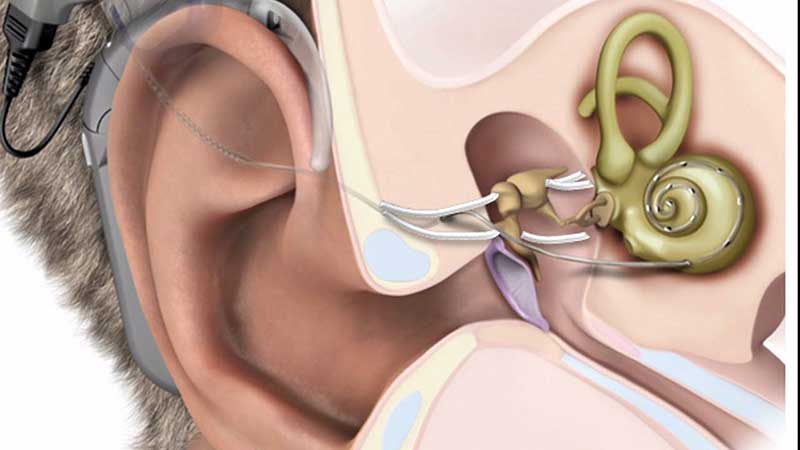
A cochlear implant is an electronic device that partially restores hearing. It can be an option for people who have severe hearing loss from inner-ear damage who are no longer helped by using hearing aids. Cochlear implants use a sound processor that fits behind the ear. The processor captures sound signals and sends them to a receiver implanted under the skin behind the ear. The receiver sends the signals to electrodes implanted in the snail-shaped inner ear (cochlea).
The signals stimulate the auditory nerve, which then directs them to the brain. The brain interprets those signals as sounds, though these sounds won't be just like normal hearing.
Cochlear implants may be placed in one ear (unilateral) or both ears (bilateral). Cochlear implants in both ears have started to be used more often to treat bilateral severe hearing loss — particularly for infants and children who are learning to speak and process language.
The surgical procedure is performed under general anesthesia. Surgical risks are minimal but can include tinnitus, facial nerve bruising and dizziness.
Every examination and operation related to the disease should be performed by a properly equipped hospital with the latest medical technology and professional academic medical staff. The Turkish Health Group will definitely direct you to the hospitals with the most modern medical equipment and professional medical staff related to your disease. Contact us for more information and a free second medical reference from a professional Turkish doctors.