
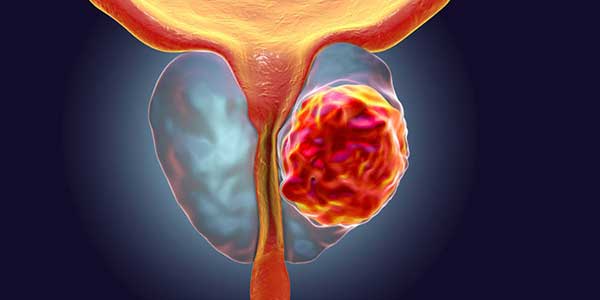
Prostate cancer is cancer that occurs in the prostate. The prostate is a gland in the male reproductive system that surrounds the urethra just below the bladder.Symptoms of prostate cancer can be:
- Dull pain in the lower pelvic area
- Frequent urinating
- Trouble urinating, pain, burning, or weak urine flow
- Blood in the urine (Hematuria)
- Difficulty in having an erection
- Pain in the lower back, hips or upper thighs
The diagnosis of prostate cancer includes:
- Prostate-specific antigen (PSA) test
- Transrectal ultrasound (TRUS)
- MRI
- CT scan and Pet scan
Treatments for prostate cancer:
Surgery:Depending on the stage of the cancer and your health status, you may have one of the following types of surgery.
Radical prostatectomy: A radical prostatectomy is the surgical removal of the entire prostate and the seminal vesicles. There are different types of radical prostatectomy including:
- retropubic radical prostatectomy
- perineal radical prostatectomy
- laparoscopic radical prostatectomy
- robotic radical prostatectomy
- nerve-sparing radical prostatectomy
Transurethral resection of the prostate (TURP): A transurethral resection of the prostate (TURP) removes part of the prostate through the urethra. In this procedure, with the patient under full anesthesia, which is medication to block the awareness of pain, a surgeon inserts a narrow tube with a cutting device called a cystoscope into the urethra and then into the prostate to remove prostate tissue.
Cryosurgery:Cryosurgery uses extreme cold, such as liquid nitrogen or liquid carbon dioxide, to freeze and destroy abnormal cells. Right now, cryosurgery is an experimental treatment for prostate cancer.
Radiation therapy:Radiation therapy is the use of high-energy rays to destroy cancer cells. Different approaches to radiation therapy can be used, including external beam radiation therapy, brachytherapy and systemic radiation therapy.
High-intensity focused ultrasound (HIFU):HIFU uses focused ultrasound waves to create intense heat, which destroys cancer cells. Right now, HIFU is an experimental treatment for prostate cancer. Sometimes doctors use it to treat prostate cancer that comes back after it is treated with radiation therapy.
NanoKnife:A new type of treatment method for prostate cancer, IRE (Irreversible Electroporation) is opening up new options for prostate cancer therapy—with a minimum of side effects. Here at Vitus, we use the NanoKnife IRE Soft Tissue Ablation System to give the best results for treating prostate cancer.Current treatment methods, such as surgery and radiation therapy, lead to impotence (loss of erection ability) and incontinence (loss of bladder control) in the majority of men, but these side effects can usually be avoided by treatment with Irreversible Electroporation using NanoKnife. In NanoKnife treatment, strong electric fields cause cells to die without exposing the tissue to radiation or heating it.
Lutetium-177-PSMA therapy:Lutetium-177 PSMA therapy, or lutetium-177 prostatespecific membrane antigen therapy is a treatment for men with advanced prostate cancer. It is to be used predominantly when the disease has metastasised and other treatments have been poorly tolerated or failed. PSMA is a type of protein found on the surface of cells on the prostate gland. When someone has prostate cancer there is an increased amount of the PSMA protein on the cell. PSMA will also appear in other parts of the body where the prostate cancer has spread or metastasised. Lutetium-177 PSMA therapy uses a molecule which attaches itself to the PSMA receptors on the cancer cells. Before it is administered, the PSMA molecule is bound with Lutetium-177, which emits beta radiation, a destructive type of radiation that damages the cancer cells when it is in close proximity to them.Over time it destroys the prostate cancer cells. The PSMA molecule acts as a means of transporting the radiation to the tumour site to damage and kill the cancer cells.
Radium-223 (Xofigo®) : Prostate cancer is the most common malignant disease in men. Several therapeutic agents have been approved during the last 10 years. Among them, radium-223 dichloride (Xofigo®) is a radioactive isotope that induces irreversible DNA double-strand breaks and consequently tumor cell death. Radium-223 dichloride is a calcium-mimetic agent that specifically targets bone lesions. Radium-223 dichloride has been approved for the treatment of metastatic castration-resistant prostate cancer with symptomatic bone metastases, without known visceral metastases.
For prostate cancer used : Hormonal therapy,Targeted therapy,Chemotherapy,Immunotherapy,Radiopharmaceuticals and Bone-modifying drugs.
Every examination and operation related to the disease should be performed by a properly equipped hospital with the latest medical technology and professional academic medical staff. The Turkish Health Group will definitely direct you to the hospitals with the most modern medical equipment and professional medical staff related to your disease. Contact us for more information and a free second medical reference from a professional Turkish doctors.