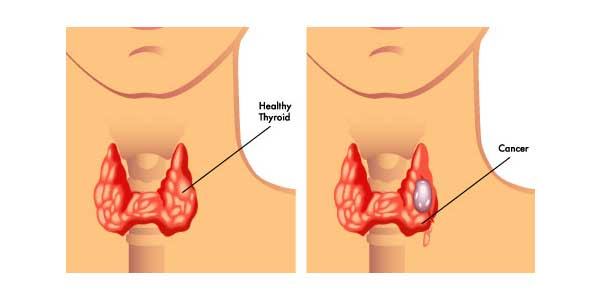
The thyroid gland is a small organ that’s located in the front of the neck, wrapped around the windpipe (trachea). It’s shaped like a butterfly, smaller in the middle with two wide wings that extend around the side of your throat. Your thyroid has an important job to do within your body — releasing and controlling thyroid hormones that control metabolism. .
When your thyroid doesn’t work properly, it can impact your entire body. If your body makes too much thyroid hormone, you can develop a condition called hyperthyroidism. If your body makes too little thyroid hormone, it’s called hypothyroidism. Thyroid disease is a general term for a medical condition that keeps your thyroid from making the right amount of hormones. There are specific kinds of thyroid disorders that includes:
- Hypothyroidism
- Hyperthyroidism
- Goiter
- Thyroid nodules
- Thyroid cancer
Hashimoto's disease is a condition in which your immune system attacks your thyroid, a small gland at the base of your neck below your Adam's apple. Inflammation from Hashimoto's disease, also known as chronic lymphocytic thyroiditis, often leads to an underactive thyroid gland (hypothyroidism). Hashimoto's disease is the most common cause of hypothyroidism. Signs and symptoms of hypothyroidism include:
- Increased sensitivity to cold
- Constipation
- Pale, dry skin, brittle nails, A puffy face, Hair loss
- Enlargement of the tongue
- Unexplained weight gain
- Muscle aches, tenderness and stiffness
- Joint pain and stiffness
- Excessive or prolonged menstrual bleeding
There’s no known cure for Hashimoto’s thyroiditis. Hormone-replacing medication is often used to raise thyroid hormone levels or lower TSH levels. It can also help relieve the symptoms of the disease. Surgery might be necessary to remove part or all of the thyroid gland in rare advanced cases of Hashimoto’s. The disease is usually detected at an early stage and remains stable for years because it progresses slowly.
Graves' disease is an autoimmune disorder that causes hyperthyroidism, or overactive thyroid. With this disease, your immune system attacks the thyroid and causes it to make more thyroid hormone than your body needs. Common signs and symptoms of Graves' disease include:
- A fine tremor of the hands or fingers
- Heat sensitivity and an increase in perspiration or warm, moist skin
- Enlargement of the thyroid gland (goiter)
- Change in menstrual cycles
- Erectile dysfunction or reduced libido
- Frequent bowel movements
- Bulging eyes (Graves' ophthalmopathy)
- Thick, red skin usually on the shins or tops of the feet (Graves' dermopathy)
The treatment goals for Graves' disease are to stop the production of thyroid hormones and to block the effect of the hormones on the body. Some treatments include:
- Radioactive iodine therapy: For radioiodine therapy, you take radioactive iodine-131 (I-131) by mouth as a capsule or liquid. I-131, at a higher dose than the dose used for imaging tests, slowly destroys the cells of the thyroid gland that produce thyroid hormone.
- Anti-thyroid medications: Antithyroid therapy is the simplest way to treat hyperthyroidism. Antithyroid medicines cause your thyroid to make less thyroid hormone. These medicines usually don’t provide a permanent cure, but in some people, the effects last a long time after they stop taking the medicine.
- Beta blockers: Beta blockers don’t stop your thyroid from producing thyroid hormone but can reduce symptoms until other treatments take effect. These medicines act quickly to relieve many of the symptoms of hyperthyroidism, such as trembling, rapid heartbeat, and nervousness.
- Surgery to remove all or part of your thyroid (thyroidectomy or subtotal thyroidectomy) also is an option for the treatment of Graves' disease. After the surgery, you'll likely need treatment to supply your body with normal amounts of thyroid hormones_
A goiter is one of the most common thyroid disorders. Goiter is an enlargement of the thyroid gland in the neck. The most common cause of goiters worldwide is a lack of iodine in the diet. Not all goiters cause signs and symptoms. When signs and symptoms do occur they may include:
- A swelling at the base of your neck that may be particularly obvious when you shave or put on makeup
- A tight feeling in your throat
- Coughing
- Hoarseness
- Difficulty swallowing and breathing
Treatment depends on the size of the goiter, your symptoms and the cause.
The type of goiter will dictate how it is treated and the possible symptoms. There are several main types of goiters:
- Multinodular goiter: In this common condition, multiple nodules develop in the thyroid.
- Diffuse smooth goiter: This occurs when the entire thyroid swells. These goiters are associated with overactive and underactive thyroid glands.
- Retrosternal goiter: This type of goiter can grow behind the breastbone. This can constrict the windpipe, neck veins, or esophagus, and sometimes requires surgery.
Every examination and operation related to the disease should be performed by a properly equipped hospital with the latest medical technology and professional academic medical staff. The Turkish Health Group will definitely direct you to the hospitals with the most modern medical equipment and professional medical staff related to your disease. Contact us for more information and a free second medical reference from a professional Turkish doctors.