
Another method used for accurate diagnosis of the prostate cancer is the prostate biopsy.
MRI fusion biopsy of the prostate is a biopsy aimed at a target area through MRI imaging, in order to correctly and accurately diagnose centres with suspected cancer. First, by means of advanced MRI technology, the regions with suspected cancer are marked. Then, by means of the navigation, using robotic arm, the biopsy needle is directed to marked suspicious MRI areas, after which target- oriented biopsy is performed. Thanks to this method, the cancer foci are detected with higher accuracy, and there is no need for repeated biopsies.
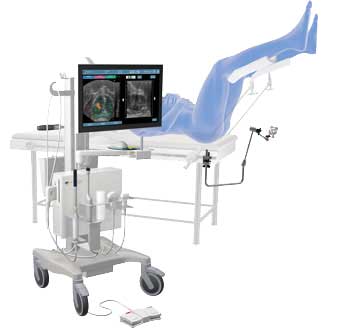
Differences and advantages of fusion biopsy and classical biopsy of the prostate:
- Classical biopsy is performed under local anaesthesia, while the patient is awake, and a fusion biopsy of the prostate is performed under general anaesthesia, while the patient is put on a bed.
- Before classical prostate biopsy, MRI is not performed, and before a fusion biopsy of the prostate, Multiparametric MRI of the prostate is performed.
- Classical biopsy is painful procedure, while in fusion biopsy, the patient does not feel any pain.
- The probability of an accurate diagnosis in classical biopsy is 70-75%, and in fusion biopsy this indicator exceeds 95%.