
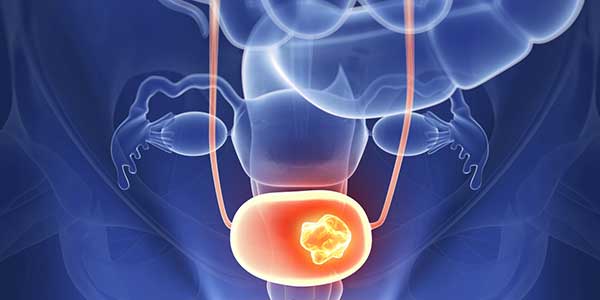
Bladder cancer is where a growth of abnormal tissue, known as a tumour, develops in the bladder lining. In some cases, the tumour spreads into the bladder muscle. Talk to your doctor if you have the following symptoms:
- Hematuria (blood in the urine) - the most common symptom, often without pain
- Frequentandurgenturination
- Painwhenyoupassurine
- Paininyourlowerabdomen
- Backpain
Your doctor may diagnose bladder cancer using one or more of the following methods:
- a urinalysis
- an internal examination, which involves your doctor inserting gloved fingers into your vagina or rectum to feel for lumps that may indicate a cancerous growth
- a cystoscopy, which involves your doctor inserting a narrow tube that has a small camera on it through your urethra to see inside your bladder
- a biopsyin which your doctor inserts a small tool through your urethra and takes a small sample of tissue from your bladder to test for cancer
- a CT scan to view the bladder
- an intravenouspyelogram (IVP)
Depending on the stage of the cancer and other factors, treatment options for people with bladder cancer can include:
Bladder Cancer Surgery:A transurethral resection of bladder tumor (TURBT) or a transurethral resection (TUR) is often used to find out if someone has bladder cancer and, if so, whether the cancer has spread into (invaded) the muscle layer of the bladder wall.This surgery is done using an instrument put in through your urethra, so it there's no cutting into the abdomen (belly). You'll get either general anesthesia (drugs are used to make you sleep) or regional anesthesia (the lower part of your body is numbed)
Cystectomy-When bladder cancer is invasive, all or part of the bladder may need to be removed. This operation is called a cystectomy. Most of the time, chemotherapy is given before cystectomy is done. General anesthesia (where you are in a deep sleep) is used for either type of cystectomy.
If your whole bladder is removed, you'll need another way to store urine and pass it out of your body.One option may be to remove and clean a short piece of your intestine and then connect it to the ureters (the tubes that carry urine out of the kidneys).Another way for urine to drain is a continent diversion. A pouch is made from a piece of intestine that's attached to the ureters. One end of the pouch is connected to an opening (stoma) in your skin on the front of your belly.
Intravesical Therapy for Bladder Cancer:With intravesical therapy, the doctor puts a liquid drug right into your bladder rather than giving it by mouth or injecting it into your blood. The drug is put in through a soft catheter that's put into your bladder through your urethra. The drug stays in your bladder for up to 2 hours. This way, the drug can affect the cells lining the inside of your bladder without having major effects on other parts of your body.
Chemotherapy and Radiation Therapy for Bladder Cancer:Chemotherapy (chemo) is the use of drugs to treat cancer. Radiation therapy uses high-energy radiation to kill cancer cells
Immunotherapy for Bladder Cancer:Immunotherapy is the use of medicines to help a person’s own immune system recognize and destroy cancer cells
Targeted Therapy Drugs for Bladder Cancer:As researchers have learned more about the changes inside cells that cause cancer, they have developed newer drugs that target some of these changes. These targeted drugs work differently from other types of treatment, such as chemotherapy (chemo). They may work in some cases when other treatments don't. Targeted drugs also often have different types of side effects.
Every examination and operation related to the disease should be performed by a properly equipped hospital with the latest medical technology and professional academic medical staff. The Turkish Health Group will definitely direct you to the hospitals with the most modern medical equipment and professional medical staff related to your disease. Contact us for more information and a free second medical reference from a professional Turkish doctors.