
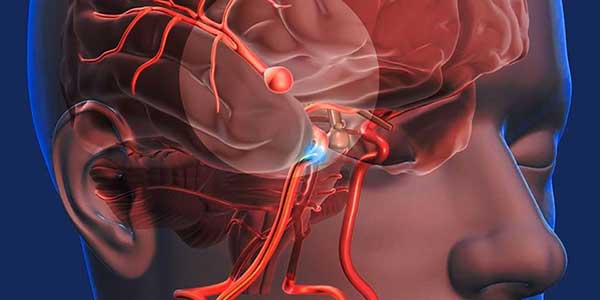
A brain aneurysm occurs when a weak spot in your brain’s arterial wall bulges and fills with blood. Aneurysms have a variety of causes including high blood pressure and atherosclerosis, trauma, heredity, and abnormal blood flow at the junction where arteries come together. Some aneurysms develop over the course of a person’s lifetime, some are inherited, and some result from brain injuries.Symptoms of brain aneurysms:
- Sudden, extremelysevereheadache
- Blurredordoublevision
- Sensitivitytolight
- Lossofconsciousness
- Pain above and behind one eye
- Numbness of one side of the face
Most brain aneurysms aren’t detected until they rupture or are found during other medical screenings. There are several tests that can help make a diagnosis, including:
- Computed tomography (CT): an imaging test that creates an X-ray of the brain
- Magnetic resonance imagery (MRI): an imaging test that uses radio waves and a magnetic field to create a picture of the brain
- Cerebral angiography: an imaging test that finds blockages in your arteries using an injected dye
- Cerebrospinal fluid (CSF) analysis: a test that detects blood in the fluid that protects your brain and spinal cord, usually taken using a spinal tap (removal of spinal fluid using a thin, hollow needle)
Treatment options for both ruptured and unruptured aneurysms involve reducing or cutting off the aneurysm’s blood supply, making it less likely to rupture from the blood’s pressure. These include:
- Microsurgical clipping: an open surgical procedure that cuts off the aneurysm’s blood supply
- Platinum coil embolization: an endovascular procedure where coils are inserted through a catheter (thin, hollow tube) into the artery where the aneurysm is located, cutting off its blood supply. This may involve use of adjuncts such as balloons, stents and neck reconstruction devices particularly for wide based aneurysms.
- Flow diversion: an endovascular procedure where a device — such as a stent (small, flexible mesh tube) — is inserted through a catheter into the artery where the aneurysm is located, reducing blood flow to the aneurysm
Intrasaccular Flow Diversion: an endovascular procedure where a mesh device placed inside the aneurysm to occlude it.
Every examination and operation related to the disease should be performed by a properly equipped hospital with the latest medical technology and professional academic medical staff. The Turkish Health Group will definitely direct you to the hospitals with the most modern medical equipment and professional medical staff related to your disease. Contact us for more information and a free second medical reference from a professional Turkish doctors.