
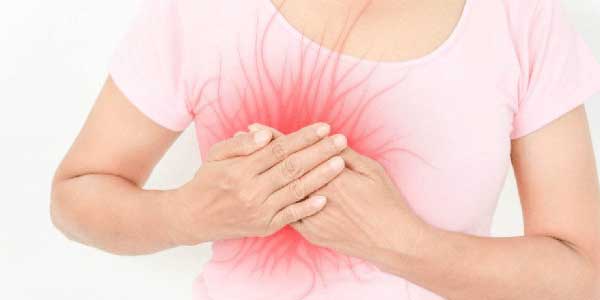
Breast cancer is cancer that forms in the cells of the breasts.Signs and symptoms of breast cancer may include:
- A breast lump or thickening that feels different from the surrounding tissue
- Change in the size, shape or appearance of a breast
- Changes to the skin over the breast, such as dimpling
- A newlyinvertednipple
- Peeling, scaling, crusting or flaking of the pigmented area of skin surrounding the nipple (areola) or breast skin
- Redness or pitting of the skin over your breast, like the skin of an orange
A family history of breast cancer and other factors increase the risk of breast cancer.
Men can get breast cancer too, but they account for less than 1% of all breast cancer cases.
Diagnosis of breast cancer:
- Clinical breast exam(CBE)
- Mammogram
- Ultrasoundexam
- MRI(magneticresonanceimaging)
- Biopsy
- PET scan(positron emission tomography scan)
If cancer is detected at an early stage, it can be treated before it spreads to other parts of the body.
Breast cancer is treated using a combination of:
- surgery
- chemotherapy
- radiotherapy
- Hormonetherapy
- Targetedtherapy
- Immunotherapy
Several types of surgery may be used to remove breast cancer, including:
Mastectomy . A surgeon removes the entire breast, along with all of the breast tissue and sometimes nearby tissues.Newer surgical techniques may be an option in selected cases in order to improve the appearance of the breast. Skin-sparing mastectomy and nipple-sparing mastectomy are increasingly common operations for breast cancer.
Lumpectomy. This procedure removes the tumor and some surrounding tissue, leaving the rest of the breast intact.During a lumpectomy, which may be referred to as breast-conserving surgery or wide local excision, the surgeon removes the tumor and a small margin of surrounding healthy tissu
Chemotherapy may be given before surgery to remove the tumor. When given before surgery, chemotherapy will shrink the tumor and reduce the amount of tissue that needs to be removed during surgery
Radiation therapy is a cancer treatment that uses high-energy x-rays or other types of radiation to kill cancer cells or keep them from growing. Therearetwotypesofradiationtherapy:
- External radiation therapyuses a machine outside the body to send radiation toward the cancer.
- Internal radiation therapyuses a radioactive substance sealed in needles, seeds, wires, or cathetersthat are placed directly into or near the cancer.
After the doctor removes all the cancer that can be seen at the time of the surgery, some patients may be given radiation therapy, chemotherapy, targeted therapy, or hormone therapy after surgery, to kill any cancer cells that are left. Treatment given after the surgery, to lower the risk that the cancer will come back, is called postoperative therapy or adjuvant therapy.
Every examination and operation related to the disease should be performed by a properly equipped hospital with the latest medical technology and professional academic medical staff. The Turkish Health Group will definitely direct you to the hospitals with the most modern medical equipment and professional medical staff related to your disease. Contact us for more information and a free second medical reference from a professional Turkish doctors.