
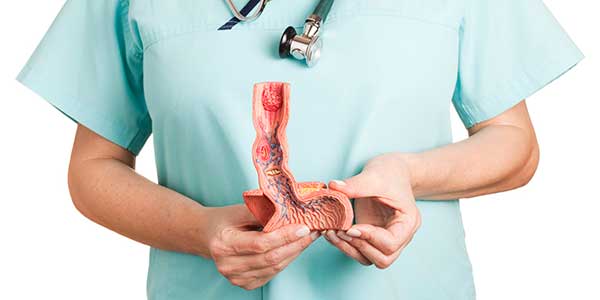
Esophageal cancers develop in the cells that line the wall of the esophagus (the tube that connects the throat to the stomach). The most common types of esophageal cancer are squamous cell carcinoma and adenocarcinoma, which develop in the cells that line the wall of the esophagus.Signs and symptoms of esophageal cancer include:
- Difficulty swallowing (dysphagia)
- Weight loss without trying
- Chest pain, pressure or burning
- Worsening indigestion or heartburn
- Coughing or hoarseness
Tests and procedures used to diagnose esophageal cancer include:
- Endoscopy,Bronchoscopy and biopsy
- Positron emission tomography (PET)
- Computed tomography (CT)
- Endoscopic ultrasound (EUS)
Esophageal cancer treatment decisions depend on tumor staging, size, location, and the patient’s wishes.
Surgery:Surgery is the most common treatment for cancer of the esophagus. Part of the esophagus may be removed in an operation called an esophagectomy. The doctor will connect the remaining healthy part of the esophagus to the stomach so the patient can still swallow. Small, early-stage cancer and high-grade dysplasia of the esophagus may be removed by endoscopic resection. During an open esophagectomy, the surgeon removes all or part of the esophagus through an incision in the neck, chest or abdomen. In most circumstances, esophagectomy can be done with minimally invasive surgery, either by laparoscopy, robot assisted or a combination of these approaches.
Chemotherapy :Chemotherapy is drug treatment that uses chemicals to kill cancer cells. Chemotherapy drugs are typically used before (neoadjuvant) or after (adjuvant) surgery in people with esophageal cancer. Chemotherapy can also be combined with radiation therapy.
Radiation therapy :Radiation therapy uses high-energy beams, such as X-rays and protons, to kill cancer cells. Radiation typically will come from a machine outside your body that aims the beams at your cancer (external beam radiation). Or, less commonly, radiation can be placed inside your body near the cancer (brachytherapy).
Other treatment methods:
- Laser therapy
- Electrocoagulation
- Targeted therapy
- immunotherapy
Every examination and operation related to the disease should be performed by a properly equipped hospital with the latest medical technology and professional academic medical staff. The Turkish Health Group will definitely direct you to the hospitals with the most modern medical equipment and professional medical staff related to your disease. Contact us for more information and a free second medical reference from a professional Turkish doctors.