
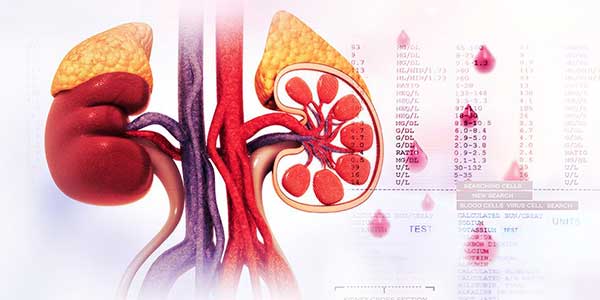
Kidney cancer is cancer that begins in the kidneys. Your kidneys are two bean-shaped organs, each about the size of your fist. They're located behind your abdominal organs, with one kidney on each side of your spine.
In adults, renal cell carcinoma is the most common type of kidney cancer.
Kidney cancer usually doesn't have signs or symptoms in its early stages. In time, signs and symptoms may develop, including:
- Blood in your urine, which may appear pink, red or cola colored
- Pain in your back or side that doesn't go away
- Loss of appetite
- Unexplained weight loss
- Tiredness
- Fever
- Tests and procedures used to diagnose kidney cancer include:
- Blood, cancer markers and urine tests. Tests of your blood and your urine may give your doctor clues about what's causing your signs and symptoms.
- Imaging tests: ultrasound, X-ray, CT or MRI.
- Removing a sample of kidney tissue (biopsy).
Surgery is the first-line treatment for most renal cell carcinoma patients. If kidney cancer has metastasized, your treatment team may combine surgery with targeted therapy or immunotherapy.
Examples of surgical procedures used to treat kidney cancer include:
Radical nephrectomy removes the entire affected kidney. Often, the adrenal gland is also removed if it is involved with, or very close to, the tumor.
Laparoscopic radical nephrectomy (LRN) requires less recovery time and causes less bleeding than open surgery. An LRN is performed by making a few small incisions, instead of one large incision.
Partial nephrectomy is performed when it is important to preserve kidney function. This includes people who have cancer in both kidneys, low kidney function, or people with one kidney.
Robotic surgery with the Da Vinci® Surgical System may be an option for patients who are candidates for kidney cancer surgery, since it offers a minimally invasive alternative to a radical nephrectomy. Surgery using the da Vinci System may result in fewer side effects.
Chemotherapy:Chemotherapy may be recommended for patients diagnosed with renal sarcoma, which is an extremely rare form of kidney cancer.
Interventional radiology:Interventional radiology allows doctors to visualize tumors in the kidneys and perform real-time image-guided interventional procedures. NanoKnife®, a minimally invasive interventional radiology procedure, may be an option for some kidney cancer patients with a tumor that is considered inoperable. The NanoKnife system is designed to help to spare normal adjacent tissues, and reduce damage to surrounding healthy cell tissue, blood vessels and other important structures.
Targeted therapy:Targeted therapy is designed to identify receptors and proteins unique to specific cancer cells. Once attached to the targeted cancer cells, these drugs kill the cells or help other therapies, such as chemotherapy, work better.
Immunotherapy:Immunotherapy is an innovative treatment option for advanced cancers, including kidney cancer that has metastasized. We use two types of immunotherapy to treat kidney cancer
Every examination and operation related to the disease should be performed by a properly equipped hospital with the latest medical technology and professional academic medical staff. The Turkish Health Group will definitely direct you to the hospitals with the most modern medical equipment and professional medical staff related to your disease. Contact us for more information and a free second medical reference from a professional Turkish doctors.