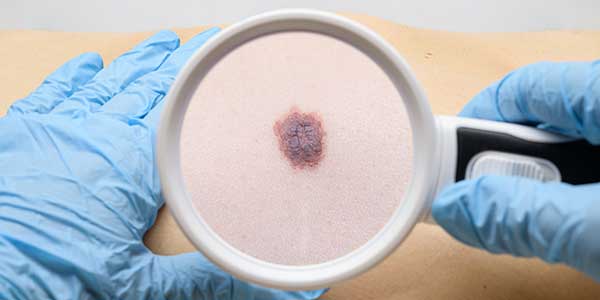
Melanoma, the most serious type of skin cancer, develops in the cells (melanocytes) that produce melanin — the pigment that gives your skin its color. Melanoma can also form in your eyes and, rarely, inside your body, such as in your nose or throat. The first melanoma signs and symptoms often are:
any skin changes, such as a new spot or mole or a change in the color, shape, or size of an existing spot or mole
The development of a new pigmented or unusual-looking growth on your skin
a flat, red spot that is rough, dry, or scaly
a spot or sore that becomes painful, itchy, or tender
Treatment for melanoma may include surgery, radiation therapy, chemotherapy, immunotherapy or targeted therapy, either alone or in combination.
Surgery is the primary treatment for localized melanoma and may be a treatment option for melanoma that has metastasized. For some localized melanomas, surgery may be the only treatment that is necessary. Surgery involves removing the lesion and some of the noncancerous tissue around it. When the surgeon removes the lesion, they send it to pathology to determine the extent of the involvement of the cancer, and to make sure that they have removed all of it.
Radiation therapy may be used for patients with advanced melanoma. The specific therapies that are used to treat melanoma include:
External beam radiation therapy is a painless outpatient procedure that carries none of the standard risks or complications associated with major surgery for melanoma, and no risk of radioactivity to you or to others with whom you have contact.
Intensity modulated radiation therapy may help melanoma patients reduce the risk of recurrence and finish treatments more quickly.
TomoTherapy® targets hard-to-reach melanoma tumors and lessens treatment-related side effects by helping to reduce damage to nearby healthy tissue.
Chemotherapy, in which a doctor uses medications that target the cancer cells
İmmunotherapy, in which a doctor administers drugs that work with the immune system to help fight the cancer
Targeted therapy, which uses medications that identify and target particular genes or proteins specific to melanoma.
Every examination and operation related to the disease should be performed by a properly equipped hospital with the latest medical technology and professional academic medical staff. The Turkish Health Group will definitely direct you to the hospitals with the most modern medical equipment and professional medical staff related to your disease. Contact us for more information and a free second medical reference from a professional Turkish doctors.