
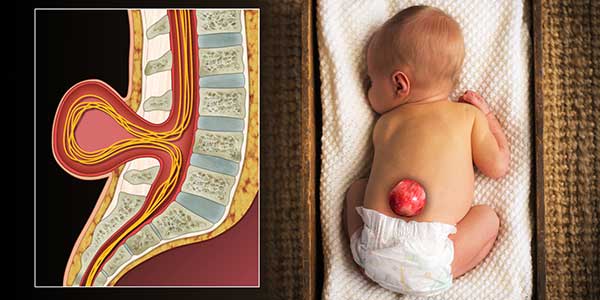
Spina bifida is a birth defect that occurs when the spine and spinal cord don't form properly. It's a type of neural tube defect. The neural tube is the structure in a developing embryo that eventually becomes the baby's brain, spinal cord and the tissues that enclose them. No one knows for sure what causes spina bifida. Scientists think it may be a combination of the environment and family history, or a lack of folic acid (a type of vitamin B) in the mother's body. There are three main types of spina bifida:
Spina bifida occulta (SBO): the most common and mildest type of spina bifida; 1 or more vertebrae does not form properly, but the gap in the spine is very small; spina bifida occulta does not usually cause any problems and most people are unaware they have it
Meningocele: This rare type of spina bifida happens when a sac of spinal fluid (but not the spinal cord) pushes through an opening in the baby's back.
Myelomeningocele: This is the most severe type of spina bifida. Here, the baby's spinal canal is open in one or several places in the lower or middle back, and a sac of fluid pokes out. This sac also holds part of the spinal cord and the nerves, and those parts get damaged.
Spina bifida is often detected during the mid-pregnancy anomaly scan, which is offered to all pregnant women between 18 and 21 weeks of pregnancy.
Treatment options include:
- Surgery – may be used to close the lesion and reduce the risk of infection.
- Shunt insertion – hydrocephalus is treated with the insertion of a tube, called a shunt, into the ventricles in the brain where the spinal fluid is produced, allowing excess cerebrospinal fluid to drain out of the brain via another tube into the abdomen or the heart.
- Orthopaedic surgery – children with spina bifida usually undergo operations on their legs and feet to improve their mobility.
- Mobility aids – walking aids or wheelchairs are commonly used.
- Diet and enemas – are used to manage faecal incontinence.
- Bladder surgery – can increase bladder size and tighten muscles.
- Self-catheterisation and continence pads – may be required to manage urinary incontinence. Sometimes faecal or urinary bags are necessary.
- Regular monitoring of kidney, bladder, shunt and spine functions.
Nerve function in babies with spina bifida can worsen after birth if spina bifida isn't treated. Prenatal surgery for spina bifida (fetal surgery) takes place before the 26th week of pregnancy. Surgeons expose the pregnant mother's uterus surgically, open the uterus and repair the baby's spinal cord. In select patients, this procedure can also be performed less invasively with a fetoscope through ports in the uterus.
Every examination and operation related to the disease should be performed by a properly equipped hospital with the latest medical technology and professional academic medical staff. The Turkish Health Group will definitely direct you to the hospitals with the most modern medical equipment and professional medical staff related to your disease. Contact us for more information and a free second medical reference from a professional Turkish doctors.