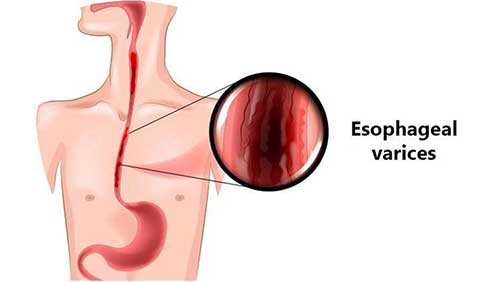
Esophageal varices are enlarged or swollen veins on the lining of the esophagus. Varices can be life-threatening if they break open and bleed.The most common cause is portal hypertension, which most commonly results from liver cirrhosis. Symptoms of esophageal varices may include:
- hematemesis (blood in your vomit)
- stomach pain
- unusually pale skin
- ongoing tiredness
- shortness of breath
- faintness or dizziness
- black or tarry stools
- dark or bright red blood in stool
Main tests used to diagnose esophageal varices are:
- Endoscopic exam.
- MRI,CT,PET CT
- Capsule endoscopy
The endoscopic band ligation approach is carried out for the patients with esophageal varices. Through endoscopy, a small elastic band is tied over the enlarged veins to prevent bleeding. It is an effective and safe, and there is less recurrence of bleeding after the procedure.
Endoscopic therapy is the main treatment for managing the esophageal varices and liver cirrhosis. It can be used as both primary and secondary prophylactic therapies. Endoscopic variceal ligation is executed until the varices are cleared, and this technique reduces the effect in the inner wall of the esophagus. However, these treatments will not reduce the blood flow in portal veins.
Every examination and operation related to the disease should be performed by a properly equipped hospital with the latest medical technology and professional academic medical staff. The Turkish Health Group will definitely direct you to the hospitals with the most modern medical equipment and professional medical staff related to your disease. Contact us for more information and a free second medical reference from a professional Turkish doctors.